About the Author: Chris Tsirkas
Christos Tsirkas is an author and dramatist, whose work is rooted in ancient Greek literature and tragedy, engaging deeply with lyric poetry, philosophy, historiography, linguistics and psychology. His writing is shaped by a wide range of influences, including Attic Tragedy, Shakespeare, French opera and symbolism, and modern Greek poetry, as well as by a sustained engagement with classical translation and philological practice.
His published and theatrical work spans adaptations, reconstructions and original tragedies, often seeking to reactivate ancient myth not as literary inheritance but as living ritual. Among his earlier works are "Bellerophon", a modern verse reimagining of the ancient myth; a metrically translated and extensively annotated edition of Euripides’ "Bacchae"; and "Medusa", an experimental reconstruction of an Attic tragedy, written in ancient dialect with full modern commentary. He has also undertaken philologically informed reconstructions of fragmentary drama, most notably Euripides’ "Antiope".
Alongside Greek tragedy, Tsirkas has written original works in English verse, including "The Veils of the Seven Skies", which bridges Attic Tragedy with Chinese opera, and "Morgana – A Tragedy in Five Acts", a Shakespearean reimagining of the Arthurian myth from Morgana’s perspective. His work consistently explores power, ritual violence, competing cosmologies, and the psychological cost of belief.
In "Pelieion Ágos", Tsirkas returns decisively to the foundations of Attic Tragedy, combining ritual severity with existential density. Across his body of work, he seeks not to modernize myth, but to expose its enduring force—where language, rhythm, and violence converge as acts of revelation rather than representation.
You can find more of his work, freely available at:
https://www.goodreads.com/author/show/19154997.Chris_Tsirkas
https://independent.academia.edu/ChrisTsirkas
https://zenodo.org/search?q=metadata.creators.person_or_org.name%3A%22Tsirkas%2C%20Chris%22&l=list&p=1&s=10&sort=bestmatch
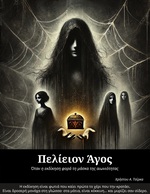
Πελίειον Άγος - Όταν η εκδίκηση μεταμφιέζεται σε θαύμα.
Πριν η Μήδεια φτάσει στην Κόρινθο ως φυγάς, πριν γίνει η μητροκτόνος μορφή της ευριπίδειας απόγνωσης, υπήρξε μια άλλη ιστορία —πιο σκοτεινή, πιο αδίστακτη, πιο τελετουργική. Το «Πελίειον Άγος» ξετυλίγει το πρώτο μεγάλο έγκλημα της Κολχίδας μάγισσας στον ελληνικό χώρο: τη δολοφονία του Πελία, σφετεριστή του θρόνου της Ιωλκού, μέσω των ίδιων των θυγατέρων του.
Όταν ο Ιάσονας επιστρέφει με το Χρυσόμαλλο Δέρας, ο Πελίας αρνείται να παραδώσει την εξουσία. Η Μήδεια, με ψυχρή μεθοδικότητα και τελετουργική γνώση, στήνει μια παγίδα όπου η ελπίδα γίνεται δηλητήριο: πείθει τις Πελιάδες ότι μπορεί, μέσω μαγικής πράξης, να ξαναδώσει νιάτα στον πατέρα τους. Το θαύμα ενός αναστημένου κριαριού λειτουργεί ως απόδειξη· η πίστη θολώνει την κρίση· και όταν τα μαχαίρια υψώνονται, οι κόρες πιστεύουν πως λυτρώνουν, ενώ στην πραγματικότητα σφάζουν.
Γραμμένο με βαρύ, αισχυλικό ύφος και με έντονο ψυχογραφικό βάθος, το έργο κινείται ανάμεσα στην τελετουργική επιβλητικότητα και την ανθρώπινη αγωνία. Το Άγος παρουσιάζεται ως ζωντανή δύναμη που μολύνει, κληρονομείται και επιστρέφει. Η Μήδεια δεν είναι ακόμη η τραγική μητέρα· είναι η «ξένη» που μόλις άρχισε να λερώνει τα χέρια της με ελληνικό αίμα. Η κάθαρση αρνείται να έρθει. Ο κύκλος της βίας δεν κλείνει —μόλις ανοίγει.
Ελπίδα, μαγεία και δόλος πλέκονται σε μια τραγωδία όπου η εκδίκηση φορά τη μάσκα της αιωνιότητας.
"Pelieion Ágos" – When Revenge Disguises Itself as a Miracle
Before Medea reaches Corinth as a fugitive, before she becomes the infanticidal figure of Euripidean despair, there exists another story —darker, more ruthless, more ritualistic. "Pelieion Ágos" unfolds the first great crime of the Colchian sorceress on Greek soil: the murder of Pelias, usurper of the throne of Iolcus, carried out through the hands of his own daughters.
When Jason returns with the Golden Fleece, Pelias refuses to relinquish power. Medea, with cold precision and ritual knowledge, devises a trap in which hope itself turns poisonous. She convinces the Peliades that, through a magical rite, she can restore their father to youth. The miracle of a resurrected ram serves as proof; faith clouds judgment; and, when the knives are raised, the daughters believe they are redeeming —when in truth, they are slaughtering.
Written in a heavy, Aeschylean idiom and marked by intense psychological depth, the work moves between ritualistic grandeur and human anguish. Ágos emerges as a living force —polluting, inherited, and inexorably returning. Medea is not yet the tragic mother; she is the “foreigner,” just beginning to stain her hands with Greek blood. Catharsis is denied. The cycle of violence does not close —it only begins.
Hope, magic, and deceit intertwine in a tragedy where revenge wears the mask of eternity.